Learn why your real estate clients are or aren't converting after the tours.
ROLE
UX designer and researcher
TIMELINE
March 2024
TOOLS
Figma, Salesforce
CONTEXT
Demo designed for a CRM (Salesforce) consulting startup
Making feedback collection more specific and transparent through strategic field selection and visual hierarchy enables teams to examine trends, understand prospect actions, refine strategies, and ultimately raise conversion rates.
01 — Problem statement
Learn why your real estate clients are or aren't converting after the tours
In residential leasing sales, converting prospects into signed agreements frequently depends on the tour experience and other variables including unit particulars and lifestyle compatibility.
The platform concentrates on monitoring key touchpoints, particularly tour experiences, enabling teams to comprehend what influences prospect choices. By gathering more detailed prospect information and feedback at the tour level, the tool assists agents and leadership in recognizing patterns behind successful and unsuccessful conversions.
SOLUTION
Making feedback collection more specific and transparent through strategic field selection and visual hierarchy enables teams to examine trends, understand prospect actions, refine strategies, and ultimately raise conversion rates.
Intended project impact
For the company: The demo increased sales opportunities by demonstrating the startup's Salesforce capabilities and real estate expertise to prospective clients.
For clients: Individual platforms would be customized per client requirements. The demo serves as a foundational template. I didn't stay long enough to collaborate with new clients, but would have conducted discovery sessions to determine their optimal features and information prioritization.
PROBLEM
These intricate elements of conversion often disappear in conventional CRM procedures. Disorganized information makes it challenging for teams to recognize conversion drivers and enhance leasing approaches.
02 — Why this matters
The significance and impact of managing real estate leads
Forecasting whether a prospect will convert presents notorious complexity due to interconnected variables. Professionals indicate it transcends pricing or availability. Such variables can include timing, individual circumstances, market dynamics, and especially the tour encounter matter significantly.
Even an ideal unit on paper fails if the tour feels hurried or maintenance concerns arise. Minor details such as lobby atmosphere or agent attentiveness often determine outcomes.
Factors influencing conversion generally include:
Pricing + hidden fees
Unit location and features
Neighborhood
Agent experience — responsiveness, helpfulness, etc.
Overall lifestyle fit
Life/financial stability
Perceived reputation and reliability of real estate company
03 — Research
A deeper look into current journeys in digitally managing real estate leads
Research began with secondary investigation through articles, social platforms, forums, and studies examining typical workflows and requirements for digital real estate prospect administration. I then consulted a subject matter specialist with over ten years of Salesforce experience in real estate organizations.
Most common pain points
Difficulty maintaining contact and developing client relationships
Critical information not consolidated, especially across multiple properties with numerous units
Misalignment when selling to groups — the touring individual may not be the ultimate decision-maker
Client disappointment from comparing actual properties with online representations
Unexpected maintenance complications
Business needs
Real estate organizations frequently encounter:
Excessive marketing expenditure for inadequate conversions
Fragmented pipeline perspectives
Alignment difficulties with organizational culture
Ensuring agents disclose critical property details, including safety concerns
"We've stopped calling them 'leads' ... You have to look at them like they're not a lead — they're a relationship. Let's call these people, people."
— Emily Smith, Wemert Group Realty
🎯 Their main goal: keep as many units occupied as possible!
⚠️ Possible biases and constraints to consider: this undertaking occurred within an organization with minimal design maturity and constrained resources. I lacked opportunities to interview numerous individuals beyond internal staff and one subject matter specialist. Fortunately, the specialist — a certified Salesforce Administrator — possessed UX comprehension and understood usability problems, though her experience was primarily in commercial rather than residential segments. Additionally, this represented my first B2B and real estate initiative, potentially missing details seasoned professionals would recognize.
04 — Competitive research
What are our hypothetical competitors like? What pain points do users have with them?
Following conversations with the subject matter specialist regarding typical personas, journeys, and pain experiences, I researched potential competitors' typical user frustrations.
Common pain points identified
😞 Too much of a learning curve
🧐 Finding features can be cumbersome
😬 Limited customization to unique requirements
☹️ Need more entry-level guidance
😞 Limited filtering
📝 Can't create templates
😬 Adding fields to certain pages
📵 Limited mobile capabilities
📅 Outdated help section
05 — User research
So what do users and businesses look for in real estate sales management tools? What are their goals?
A summary of typical user and business needs discovered through secondary and primary research:
📑 Unified workflows
Navigating numerous tabs or screens to access prospect data, tours, and agreement specifics is frustrating
Customization would be valuable if workflows require adjustment
Absence of centralization causes important information, such as maintenance details, to be overlooked
UI design creates usability challenges, including difficult-to-locate or misleading buttons
🗂 Information architecture
Information organized through multiple perspectives (by property, agent, unit, etc) rather than a single view would be advantageous
Integration with other platforms would simplify processes
Standard activities shouldn't demand excessive clicks
Reduces dependency on spreadsheets and external tools
⚒️ The right features
Automating birthday and communication replies
Displaying property manager identity for specific tours and their availability
Simple report production with easy-to-interpret dashboards
Options to maintain previous system versions
Visibility into prospect movement timing, including anticipated dates
🤔 Other considerations
Commercial and residential administration demands differing capabilities — platform flexibility or inclusivity across modes would assist
Understanding conversion drivers: tour circumstances, tour conductors, prospect reactions
Whatever minimizes agent administrative work, freeing time for sales and maintaining occupancy!
06 — Mockups
From research to a working demo
⚠️ This demo represents only one segment of a comprehensive real estate leasing instrument the startup would develop for clients. Not all typical real estate leasing management capabilities were constructed, as this sample demonstrates customization potential.
Sample flow: monitoring properties
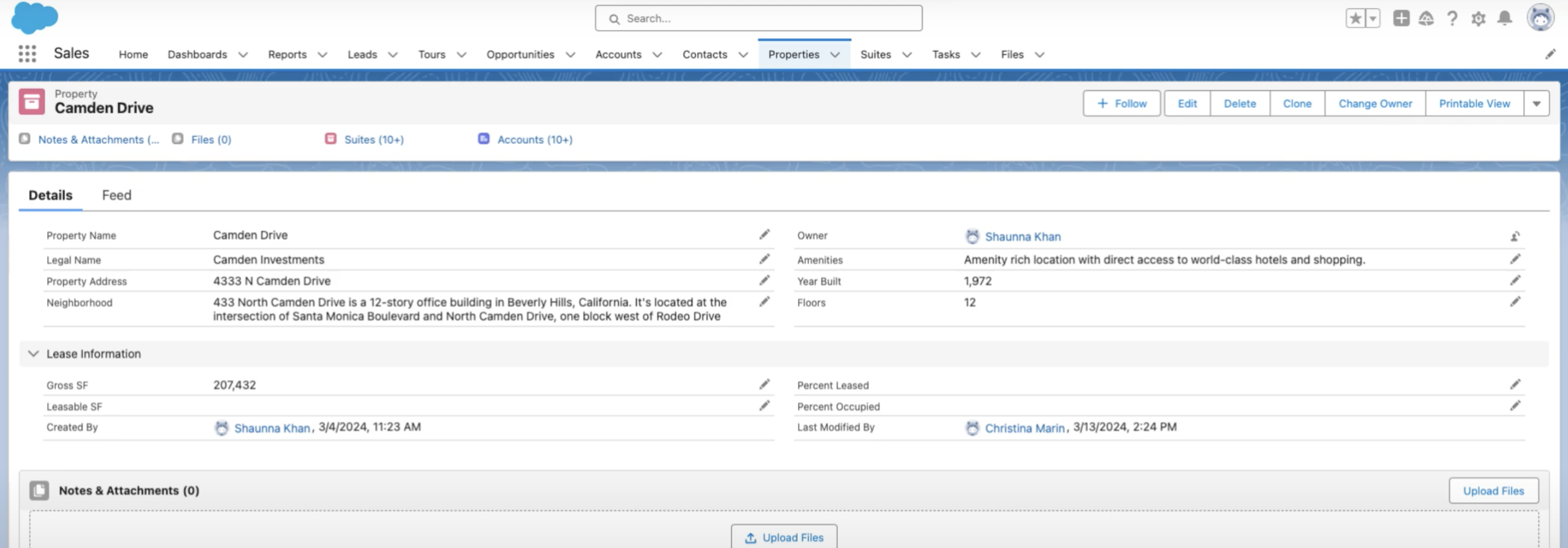
A critical requirement for real estate administration tools is an organized, unified property database. The upper white navigation customization reflects information organization consistent with mental frameworks from conventional real estate applications.
Property details fields align with information agents require to sustain full occupancy, concentrating on essential property particulars and lease/occupancy percentages.
IN RETROSPECT
A field specifically for "problem units" should have been incorporated, facilitating consistent identification of persistently difficult-to-lease units and pattern recognition. The original design relegated this to the Notes field, risking oversight of critical information.
🔔 Not pictured: notifications when occupancy decreases beneath a defined level.
ADDITIONAL IMPROVEMENT
A module within each property profile displaying all associated suites would have been preferable to positioning suites in a separate tab, better addressing documented pain points.
07 — Tracking lease lifespans
Opportunity management
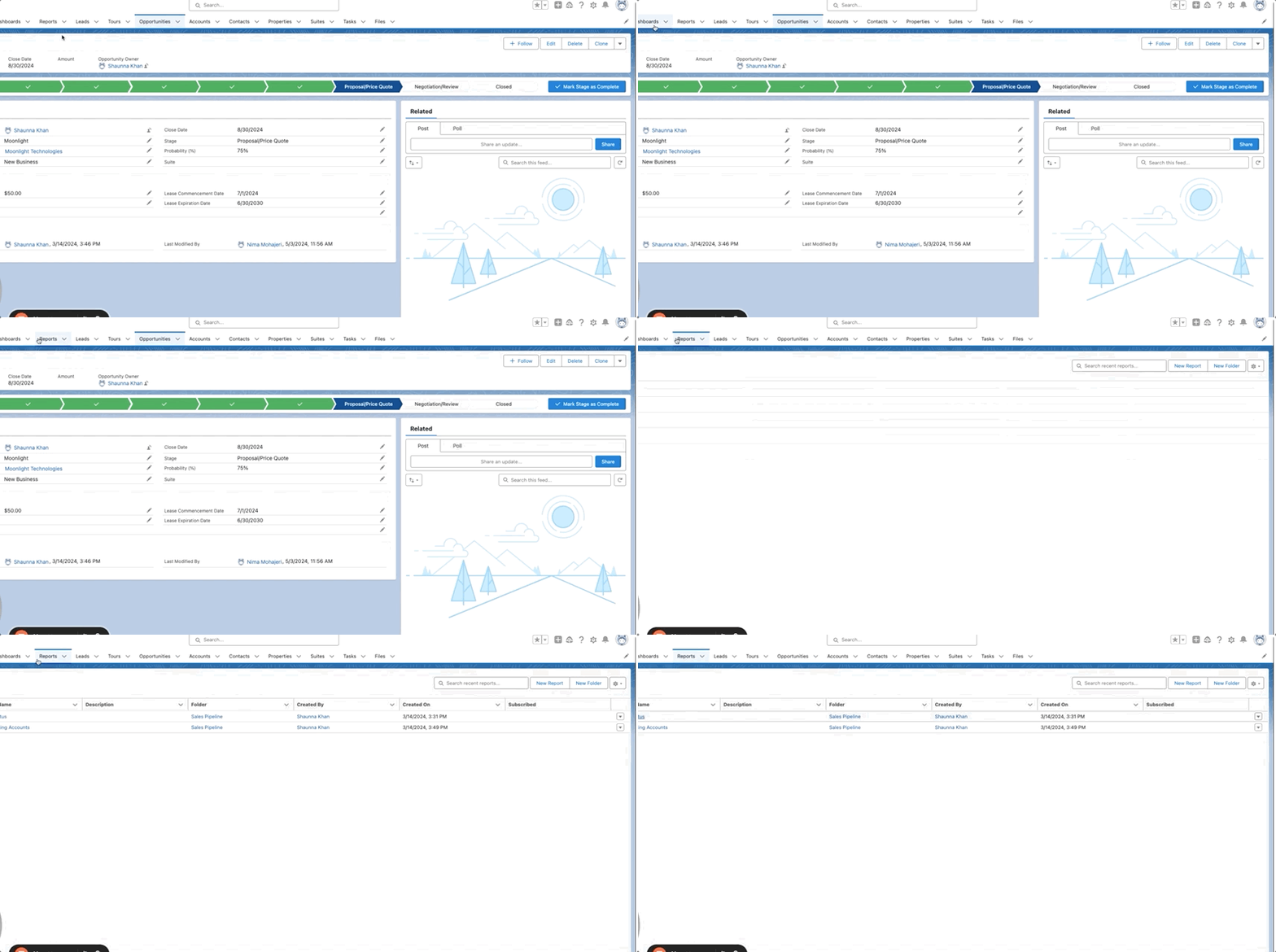
Salesforce's standard opportunity management display was customized to monitor lease expiration and critical specifics including rental rates per square footage.
🔔 Not pictured: notifications when leases expire or approach expiration.
08 — Monitoring conversions
Viewing tours and leads
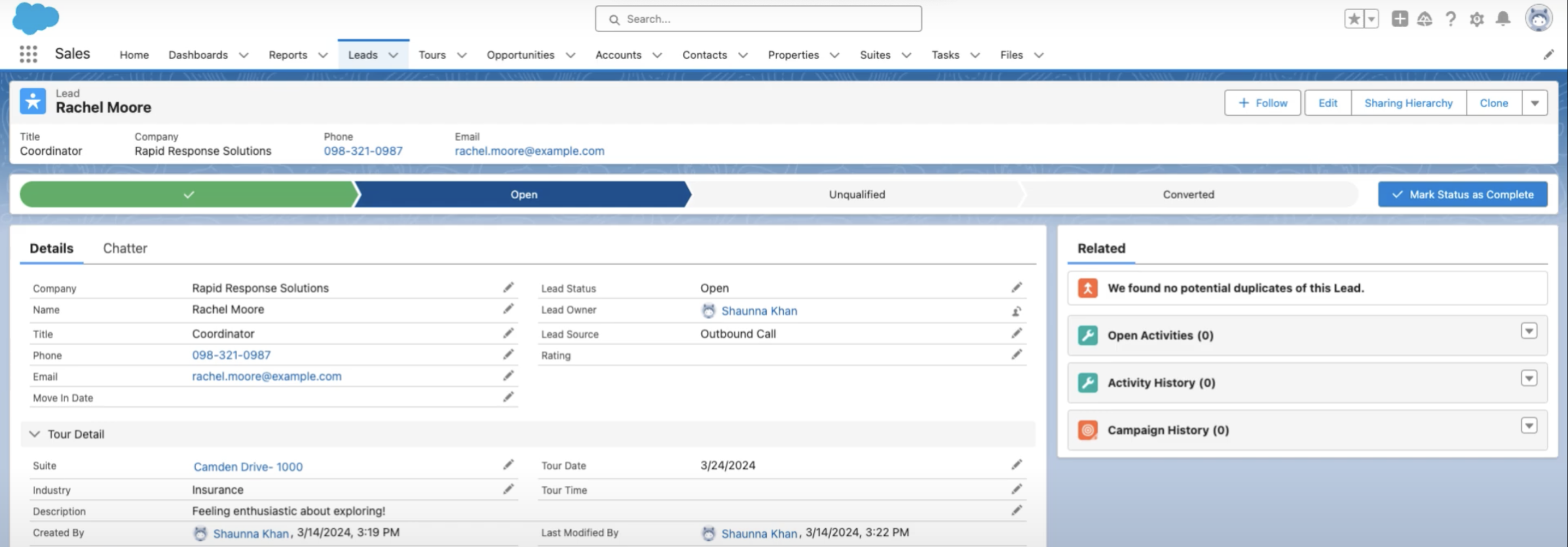
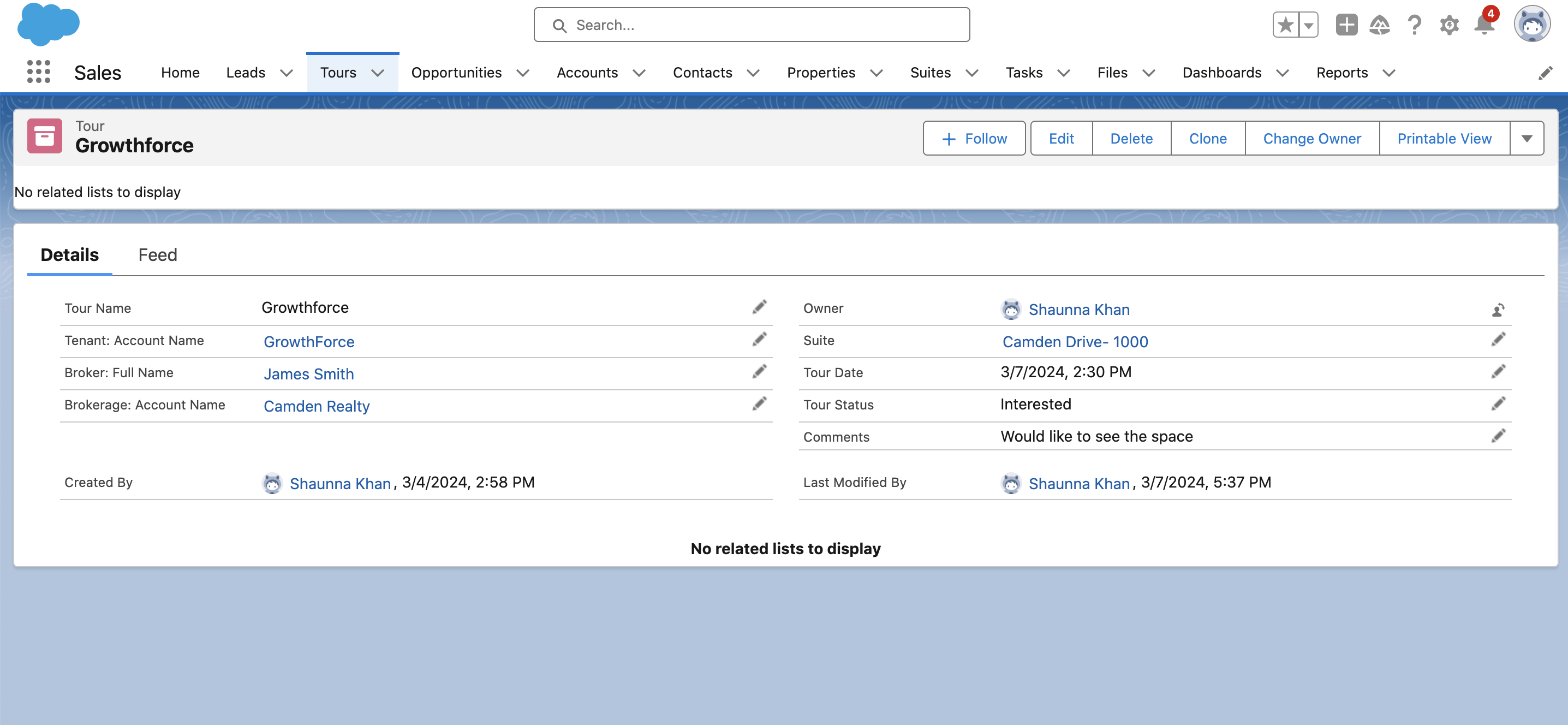
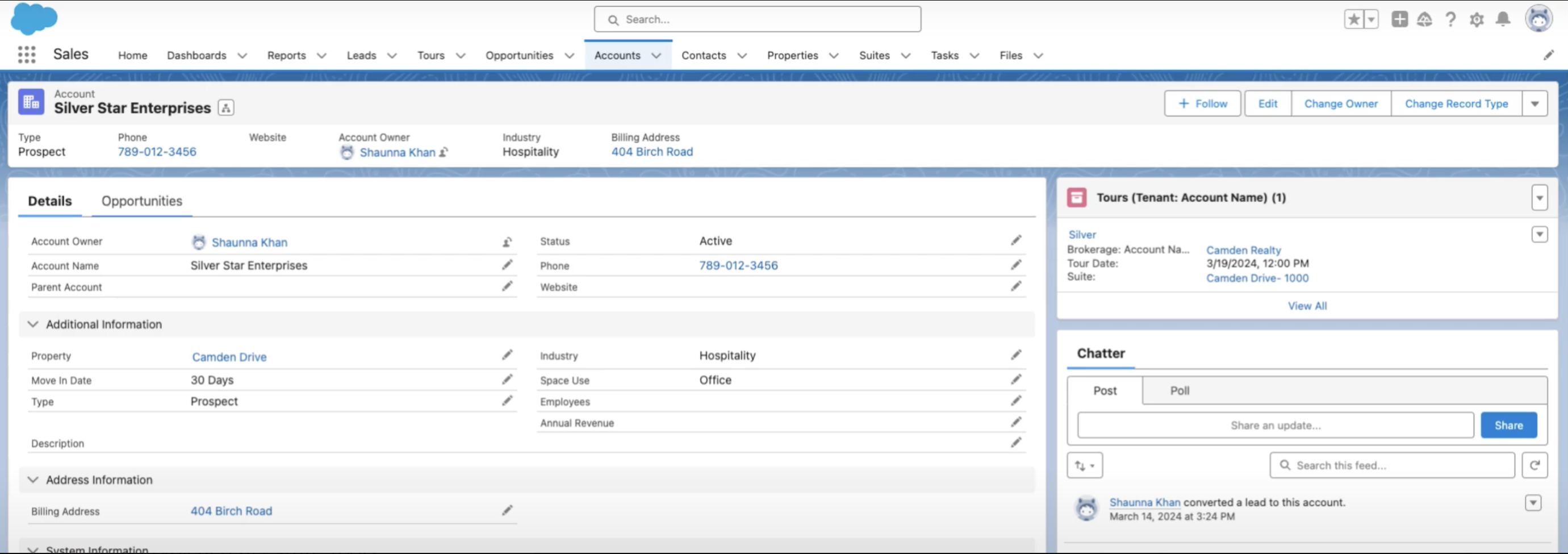
Salesforce's standard prospect display was configured by incorporating fields for associated property/suite, tour particulars, and descriptive sections for capturing nuanced information conveying narrative dimensions numbers alone cannot provide.
As mentioned earlier, the tour frequently determines whether a prospect chooses to convert. A specialized Tours module was constructed capturing the who, what, when, where, and why of tour experiences. Recording such extensive details about this pivotal real estate sales moment supports organizations in comprehending prospect activity patterns.
09 — Measuring success
Setting prospective KPIs
I collaborated with Salesforce administrators determining which metrics prospective real estate customers should prioritize.
📈 To measure the success of this product, our clients should mainly look at:
1Lead-to-tour conversion rate How many leads result in scheduled tours?
2Tour-to-application or tour-to-lease conversion rate How effective are tours at moving clients forward?
3Average time to lease a unit How many days a unit sits vacant before being leased?
4Occupancy rate/vacancy rate Overall percentage of leased versus available units per property.